The first time I witnessed an Etutu ceremony, I was struck by its profound transformative power. A friend who had struggled with persistent anxiety and unexplained physical symptoms for years participated in this sacred Yoruba ritual after conventional treatments had failed.
What unfolded that evening revealed the sophisticated healing wisdom our ancestors have carried for generations. Two weeks later, my friend described feeling “as if a heavy weight had been lifted,” with both emotional distress and physical symptoms significantly diminished.
What is an Etutu Ceremony?
Etutu, a traditional Yoruba spiritual cleansing ritual, represents one of Africa’s most powerful healing methodologies. At its core, this ancestral propitiation ceremony creates a framework for addressing imbalances between an individual and spiritual forces—whether ancestors, Orishas (divine energies), or other spiritual entities.
- What is an Etutu Ceremony?
- Origins and Cultural Context of the Etutu Ceremony
- The Concept of Spiritual Diplomacy
- Global Reach and Evolution
- The Philosophy Behind Etutu Healing
- Ancestral Connection and Wellness
- The Power of Symbolic Action
- Key Components and Stages of the Etutu Ceremony
- The Psychological Dimensions of Etutu
- Emotional Catharsis and Closure
- Community Witnessing
- Physical and Emotional Benefits
- Frequently Asked Questions (FAQ)
- What does “Etutu” mean?
- Do I have to be Yoruba to participate in Etutu?
- How do I know if I need an Etutu ceremony?
- Is Etutu the same as a sacrifice?
- How long do the effects of the ceremony last?
- Conclusion
The term “Etutu” in the Yoruba language means “to cool” or “to pacify,” perfectly capturing its fundamental purpose of restoring harmony and balance to a “heated” life or situation.
Origins and Cultural Context of the Etutu Ceremony
The practice of Etutu has deep historical roots among the Yoruba people of southwestern Nigeria. For countless generations, it has served as a cornerstone of a comprehensive system of spiritual wellness. As a Yoruba elder once explained, “Etutu is not just a ritual—it’s spiritual diplomacy.”
The Concept of Spiritual Diplomacy
In Yoruba cosmology, problems like physical illness or persistent “bad luck” are often seen as manifestations of spiritual “heat.” An Etutu ceremony acts as a form of diplomacy, reestablishing good relations with the forces that influence our daily lives.
Global Reach and Evolution
While rooted in Nigeria, Etutu ceremonies evolved within the African Diaspora. In Brazil, Cuba, Trinidad, and the United States, these traditions were preserved and adapted, maintaining their core purpose of pacification even as they blended with local cultural influences.
The Philosophy Behind Etutu Healing
To appreciate how Etutu facilitates healing, one must understand the principle of Iwontunwonsi (balance). In Yoruba belief, emotional distress isn’t just a biochemical issue; it often has ancestral or spiritual dimensions.
Ancestral Connection and Wellness
Unlike many modern cultures that view ancestors as historical figures, Yoruba tradition recognizes ancestors as active participants in our lives. When these relationships are neglected, it can lead to emotional and physical symptoms. Etutu serves as a bridge to resolve these “unseen” conflicts.
The Power of Symbolic Action
Etutu bridges invisible emotional wounds with visible ceremonial actions. By creating concrete, symbolic ways to address spiritual imbalances, the ceremony gives tangible form to the abstract process of emotional healing, reaching depths that “talk therapy” alone sometimes cannot.
Key Components and Stages of the Etutu Ceremony
While every Etutu is customized based on Ifa divination, most ceremonies follow a structured spiritual technology designed to move a person from a state of chaos to a state of peace.
1. Consultation and Divination
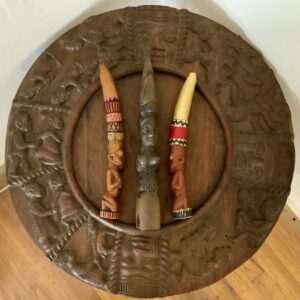
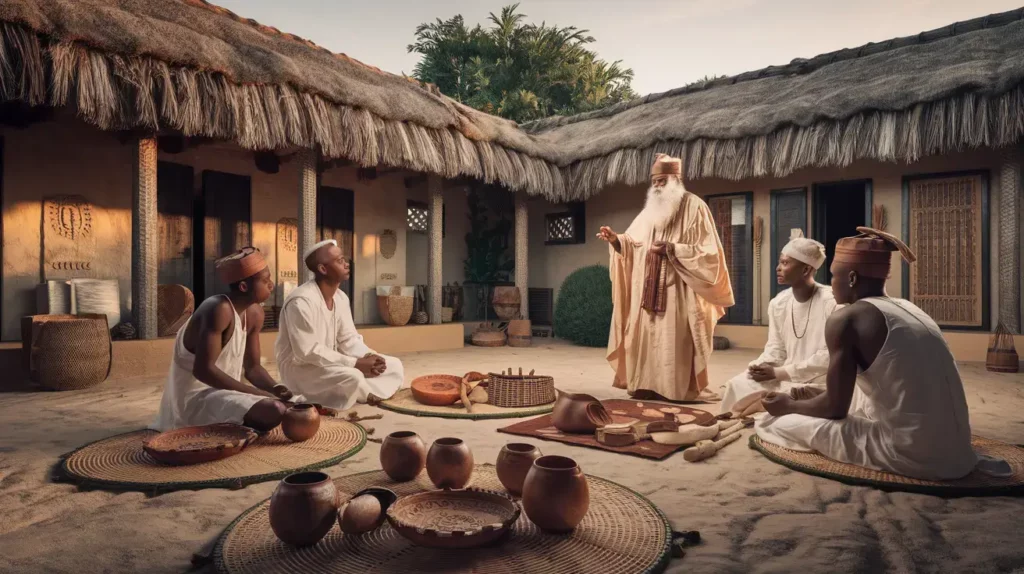
The process begins with a Babalawo (priest) or Iyanifa (priestess) using tools like the Opele (divination chain) to diagnose the spiritual root of the problem.
2. The Ebo (Sacred Offerings)
Specific items—foods, herbs, or symbolic objects—are identified. These are not random; they are “prescribed” to match the energy of the force being pacified.
3. The Ritual Phases
- Invocations: Opening the spiritual space and establishing sacred boundaries.
- Presentation: Stating the problem clearly to the divine forces.
- Transfer: Symbolically moving “heavy” or negative energy from the person to the offerings.
- Disposal: Placing offerings in specific locations (crossroads, rivers, or forests) to finalize the release.
The Psychological Dimensions of Etutu
What is truly fascinating is the psychological sophistication of Etutu. While framed in spiritual terms, these ceremonies provide powerful psychological interventions recognized by modern science.
Emotional Catharsis and Closure
Etutu ceremonies excel at providing psychological closure. By creating a defined ritual space where difficult matters can be named and resolved, they offer a sense of completion. The ritual creates a safe container for catharsis—the release of suppressed emotions like grief, guilt, or trauma.
Community Witnessing
Unlike private therapy, Etutu often involves family or community supporters. This social validation is profoundly important for healing, especially when addressing issues like family patterns or intergenerational trauma.
Physical and Emotional Benefits
Practitioners consistently report significant benefits that span physical and emotional dimensions:
- Stress Reduction: Participants often report a “weight lifting” and a deep sense of calm.
- Symptom Relief: Chronic issues like migraines or insomnia often resolve when the underlying emotional/spiritual “heat” is cooled.
- Mental Clarity: The ceremony helps clear the “fog” of depression or confusion, providing a renewed sense of purpose.
Frequently Asked Questions (FAQ)
What does “Etutu” mean?
Etutu comes from the Yoruba word for “cooling” or “pacification.” It refers to the process of calming spiritual forces to restore balance to a person’s life.
Do I have to be Yoruba to participate in Etutu?
No. While it is a Yoruba tradition, many practitioners work with people from all backgrounds. The focus is on the universal human need for spiritual and emotional harmony.
How do I know if I need an Etutu ceremony?
Typically, a need for Etutu is identified through Ifa divination. If you are experiencing persistent obstacles, unexplained illness, or emotional distress that hasn’t responded to other treatments, a consultation with a Babalawo may be helpful.
Is Etutu the same as a sacrifice?
Etutu involves Ebo (offerings), which can be seen as a form of sacrifice or exchange. It is a symbolic act of giving to receive spiritual alignment and healing.
How long do the effects of the ceremony last?
The immediate sense of relief is often permanent for that specific issue, provided the individual follows the “taboos” or advice given during the ritual to maintain their new state of balance.
Conclusion
As we face growing mental health challenges worldwide, ceremonial healing spaces like those created in Etutu offer valuable complements to conventional approaches. The human need for ritual, meaning, and community support remains constant. Traditional ceremonies remind us that addressing the “unseen” is not a luxury, but a necessity for complete wellness.